






Blog
Solitaire is a brain game, which puts it in the same category as chess, Sudoku, and other cerebral pursuits. That’s a fun group to be part of, but I think solitaire stands out from its peers because it’s easy to learn.
Chess, for example, pushes your brain to the limit of its logical capabilities, making it difficult to master. In comparison, solitaire has plenty of potential brain-enriching qualities, but you can learn how to play in a few minutes. That combination, for me, is why it’s such an approachable brain game.
If you’re new to the game, our guide to how to play Solitaire Grand Harvest is a great place to start.
To show you just how helpful it may be, I’ve picked out five reasons solitaire is fun and, potentially, beneficial for your mind and body:
1. Solitaire Can Be Calming
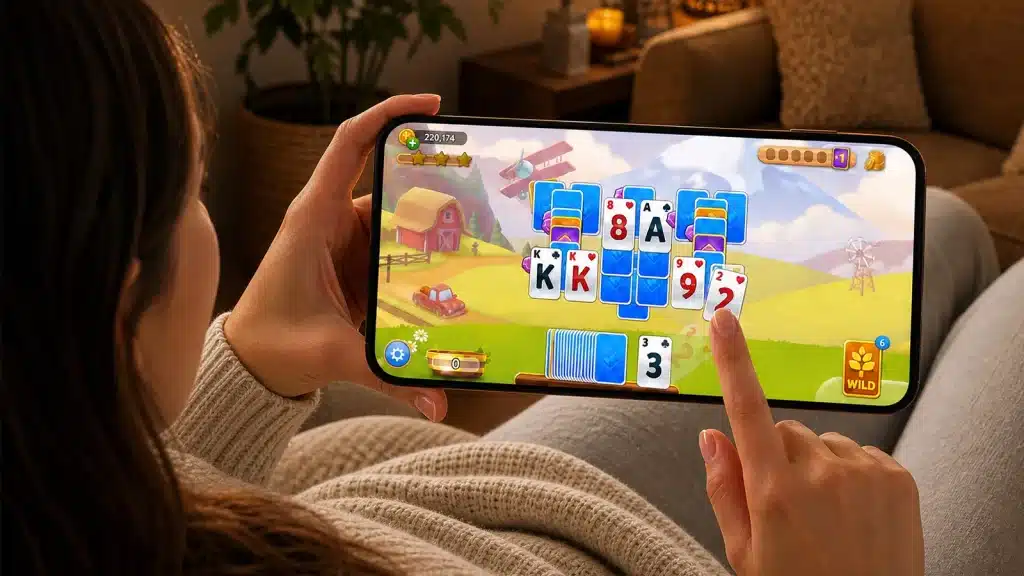
Solitaire is played in isolation, so there’s no pressure from other players or outside factors. Additionally, when you play on Solitaire Grand Harvest, you don’t have to risk any money.
These conditions allow you to take things at your own pace and have some risk-free fun. For me, that makes solitaire a relaxed card game. Relaxation is an important aspect of gaming and life. We’ve explored this idea before in Why Solitaire Is a Relaxing Game, which digs deeper into the calming side of the game.
The Benefits
Think back to a time you felt truly relaxed. It was good, right? Relaxation is generally associated with reduced physiological arousal. Stress activates interconnected systems, including the sympathetic–adrenal–medullary system, which influences adrenaline, and the hypothalamic–pituitary–adrenal axis, which regulates cortisol.
Some established relaxation techniques have been associated with reduced autonomic arousal or lower cortisol levels, although responses vary across individuals and activities. Reducing the output of these chemicals may help us feel calmer, which in turn is often linked with better concentration and problem-solving.
The Conclusion
Solitaire is a low-stress game that can help you stay relaxed. When you’re more relaxed, you may experience fewer negative feelings and have more fun. Support for this idea comes from a 2021 study by Desai et al. [1]. Although the researchers used a casual video game (Flower) rather than solitaire, it’s reasonable to consider whether similar effects could apply to other low-pressure games.
The study compared 20 minutes of gameplay with 20 minutes of mindfulness. Both groups showed immediate pre-to-post reductions in self-reported stress, heart rate, and blood pressure, although mindfulness produced the larger reduction in reported stress. The study did not assess whether these effects lasted over time, and did not test solitaire.
2. Solitaire Can Keep Your Brain Active
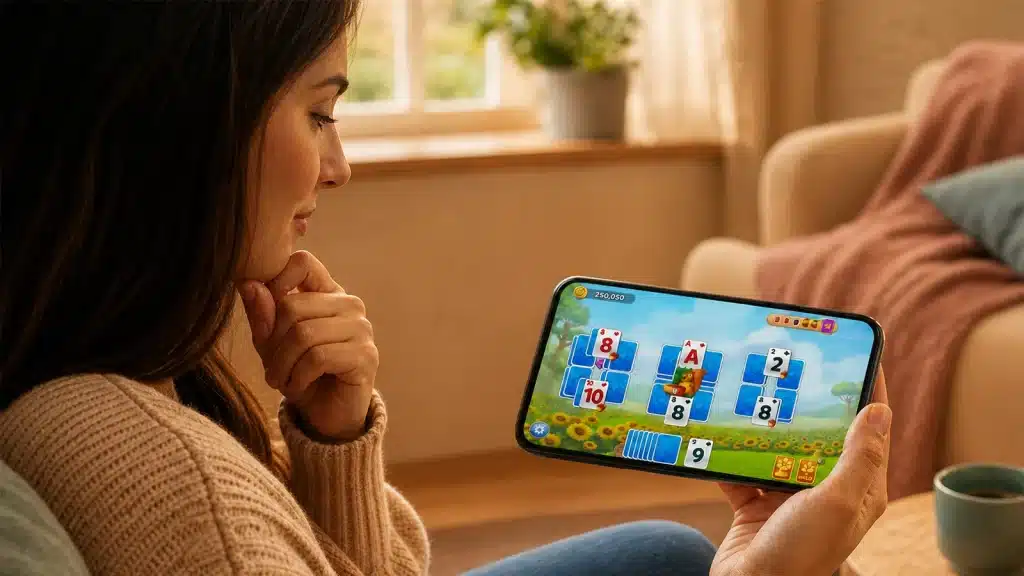
The rules of solitaire are easy to master, but every game you play is unique. Each one has its own twists and turns, which means you need to think strategically, logically, and, in some cases, creatively.
Taking your brain out of its comfort zone by asking it to think through a problem, such as where to put the next card in a game of solitaire, requires brainpower. There’s some evidence that this kind of mental activity may be beneficial, drawn from studies looking at other card games and mahjong.
Wang et al. [2] found that older Chinese adults who played card games and mahjong scored higher on cognitive tests than those who didn’t. It’s important to note this is an association, not proof that the games caused the higher scores. Solitaire wasn’t studied directly, but it does contain elements of skill and strategic thinking. On that basis, it’s fair to speculate that similar engagement could be worthwhile for people looking to keep their brains active.
Retaining our mental skills is something we all need to do because, unfortunately, we can’t stop aging. Think about all the information you need to retain while you’re playing solitaire. You need to remember the cards you’ve seen, the cards you’ve moved, and the suits of different cards. There’s a lot going on.
At the same time, you need to think about what will happen if you place X card in one spot versus another. All these things require effort, focus, and critical thinking. Basically, your brain can’t afford to be distracted or lazy when you’re moving cards around at Solitaire Grand Harvest.
The Benefits
Taxing your brain can be beneficial because it keeps it active. That’s potentially important in later life because cognitive function can decline over time. I’m not saying you can override genetic factors or defy the laws of nature by playing solitaire. However, keeping your brain active may be one of many factors linked to healthier cognitive aging, and the association observed by Wang et al. is consistent with that idea.
The Conclusion
Solitaire is fun, but it also makes you think. Engaging your brain this way is generally considered positive. On that basis, playing solitaire regularly could be one enjoyable way to keep your mind engaged as you age, though it shouldn’t be seen as a guaranteed defense against cognitive decline.
Curious what else makes the game more than just cards? See Way More Than Just Solitaire.
3. Solitaire Can Teach You to Think Strategically
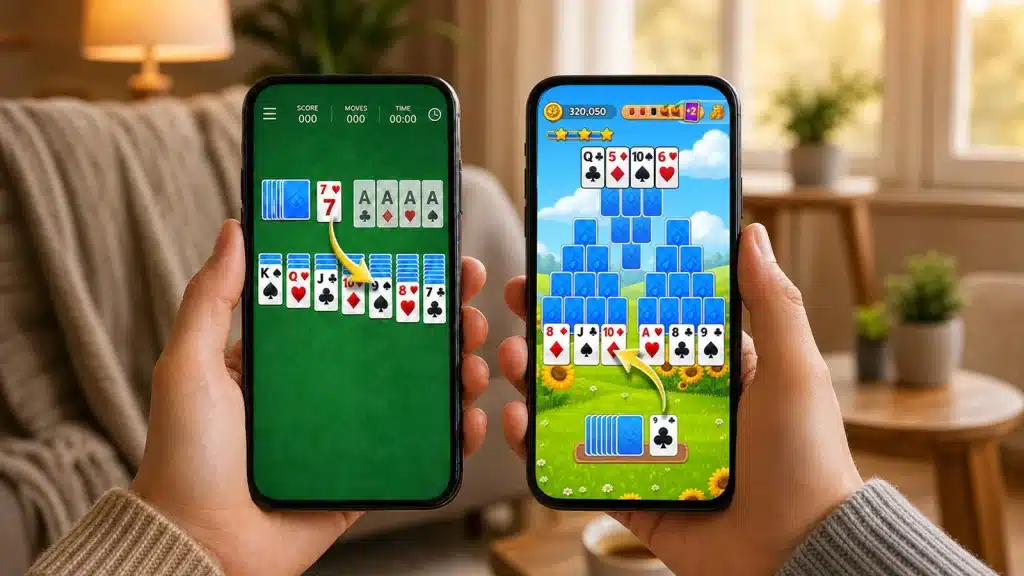
I’ve played many card games in my life. Some have a larger skill component than others. Although solitaire might not be at the top of the hierarchy, there are definitely some skills you need to master if you want to play optimally.
It’s worth noting that solitaire isn’t a single game. There are several variants, and each rewards slightly different skills. The two most popular are Klondike and Tri-Peaks.
Klondike Solitaire Skills
Klondike is the classic version most people picture when they hear the word solitaire. It involves building descending sequences in the tableau and moving cards to foundation piles by suit. Based on my experience and research, here are the main skills you need:
- Consider the impact of high-value cards and whether you need to use them for a sequence or send them to the foundation. Putting high-value cards into the foundation too quickly can stop you from making sequences.
- Always check the tableau first. Checking the stockpile is fine, but you should always check the tableau (aka gameboard) first for available moves.
- Don’t instantly fill up columns. Even though it can be tempting, you shouldn’t automatically fill an empty column with a king. Empty columns are extremely valuable. Therefore, you should check if a king can be used somewhere else before you fill an empty column.
Tri-Peaks Solitaire Skills
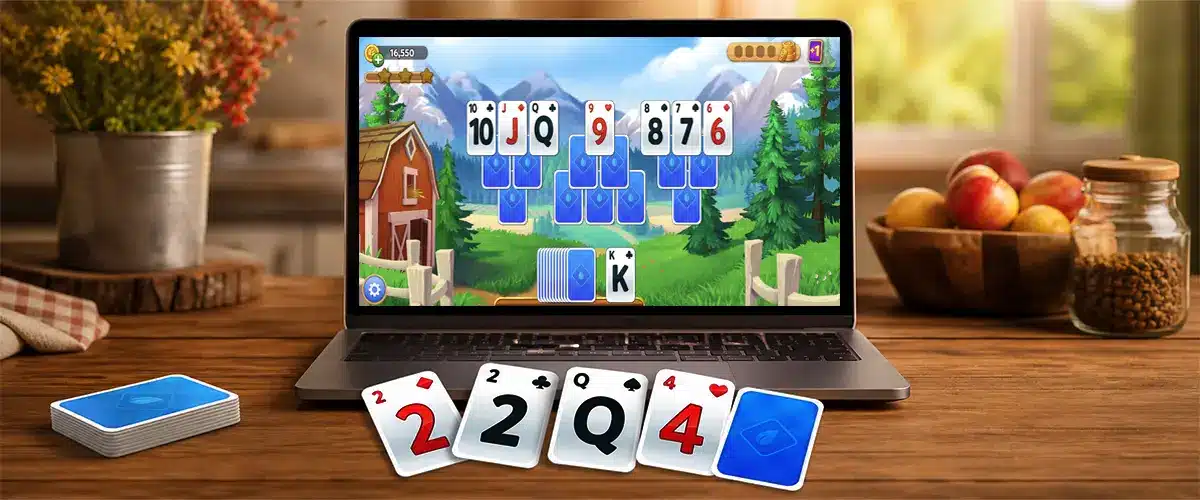
Tri-Peaks is played across three overlapping pyramids of cards. The goal is to clear the peaks by selecting cards that are one rank above or below the active card in the waste pile. Suits don’t matter in the standard version, and the pace is generally faster than Klondike. Here are the main skills you need:
- Plan chains of consecutive cards. Long uninterrupted chains typically score more points and clear cards faster, so look for sequences of ascending or descending values before making your first move.
- Prioritize cards that unlock others. Some cards are blocking two or three others in the pyramid. Removing the blockers first opens up more options later in the game.
- Decide carefully when to draw from the stock. Drawing a new card usually resets your chain, so it’s often best to exhaust the playable cards on the peaks before dipping into the stockpile.
Both games reward the same underlying habits: looking ahead, weighing multiple options, and resisting the urge to make the first available move. That’s the part that may engage your brain, regardless of which version you play.
The Benefits
Thinking strategically is often compared to exercise for the brain. When we repeatedly engage in mentally demanding tasks, the brain can form and strengthen neural connections, a process widely called neuroplasticity.
Neuroplasticity is essentially the brain’s ability to adapt and reorganize itself in response to experience. Stronger, more efficient connections may support cognitive skills such as logic, memory, and problem-solving, though the relationship between any single activity and measurable cognitive gains is complex.
The Conclusion
Learning solitaire strategy and thinking critically may engage the brain in ways that support neuroplasticity. We can look to a 2024 study by Zhao et al. [3] for a related example. The study found that six experienced college-level contract-bridge players showed stronger brain responses on an fMRI monitor while performing a visual task than 25 non-players did. Although the study doesn’t state that bridge caused the differences, because participants weren’t given bridge training, the effect was observed.
Solitaire is a different game from contract bridge, particularly in terms of strategic depth and social interaction. However, there is still an element of skill in solitaire. Based on this, it’s possible to speculate that regular strategic play could have some neuroplastic effect, though this hasn’t been demonstrated for solitaire specifically.
Any effect would likely be smaller than that observed with a demanding game like contract bridge. Still, taken alongside the broader evidence that mentally engaging activities are associated with better cognitive outcomes, solitaire could plausibly be one of many activities that contribute to brain health.
Curious what else makes the game more than just cards? See Way More Than Just Solitaire.
4. Solitaire Shows You that Patience is a Virtue
You’ve probably heard the saying, “patience is a virtue.” The saying means different things to different people, but the fundamental sentiment is that things take time. That’s particularly true in solitaire.
Not only does it take time to think through the best moves, it also takes time to win. If you’ve spent just a few minutes on Solitaire Grand Harvest, you’ll know that patience is important because you can’t win every game.
Fun fact: Solitaire is commonly called patience in the UK. The Brits borrowed the word from the French, who also used it to describe the game of solitaire because, as you can guess, it’s a game that requires focus, perseverance, and patience.
The Benefits
Being patient means we’re not acting on impulse. Essentially, you’re delaying gratification, which is a skill you can use in many aspects of life. Being patient allows you to take stock of situations before making a move. This isn’t always a benefit. However, there are times when it’s better to assess all the outcomes before acting.
The Conclusion
Solitaire requires players to pause, consider alternative moves, and continue despite uncertain outcomes.
Research involving purpose-designed games, such as a study by Anzman-Frasca et al. [4], suggests that repeated gameplay can provide opportunities to practice delayed gratification in young children.
Although solitaire itself hasn’t been shown to make people more patient, its structure may encourage deliberate rather than impulsive play. Whether this translates into greater patience in other parts of life is an open question, but it’s an interesting possibility.
5. Solitaire Can Be a Distraction
The final reason solitaire may be good for your brain is that it’s a distraction. It’s entertaining, exciting, and enjoyable. When you’re playing, you’re probably not thinking about the stresses in your life.
That’s a good thing. Life can be difficult at times, and we all need an escape. That’s what solitaire and other card games offer. They give us a chance to take a break from the world, focus our minds on something else, and have fun.
The Benefits
Researchers, such as Naila Rasheed [5], have long contended that prolonged stress contributes to various health problems. From fatigue and depression to headaches and stomach problems, stress can be highly problematic. Rasheed doesn’t cover games or distraction as a coping mechanism, so we can’t cite her work as direct evidence that solitaire helps. But her paper does underline why finding healthy ways to unwind matters.
For evidence more directly relevant to gameplay, we can return to Desai et al. [1], whose study suggested a short-term stress-reducing effect from playing a casual video game. If enjoyable, low-pressure games can offer a temporary mental break; solitaire is a reasonable candidate for that role.
The Conclusion
Playing solitaire can be soothing for many people. Combined with what Desai et al. observed about short-term stress reduction from casual gameplay, there’s a reasonable case to be made that engaging in enjoyable activities like solitaire could offer a small buffer against everyday stress. It’s not a substitute for proven stress-management techniques, but as one option among many, it has appeal.
Solitaire May Benefit Your Brain
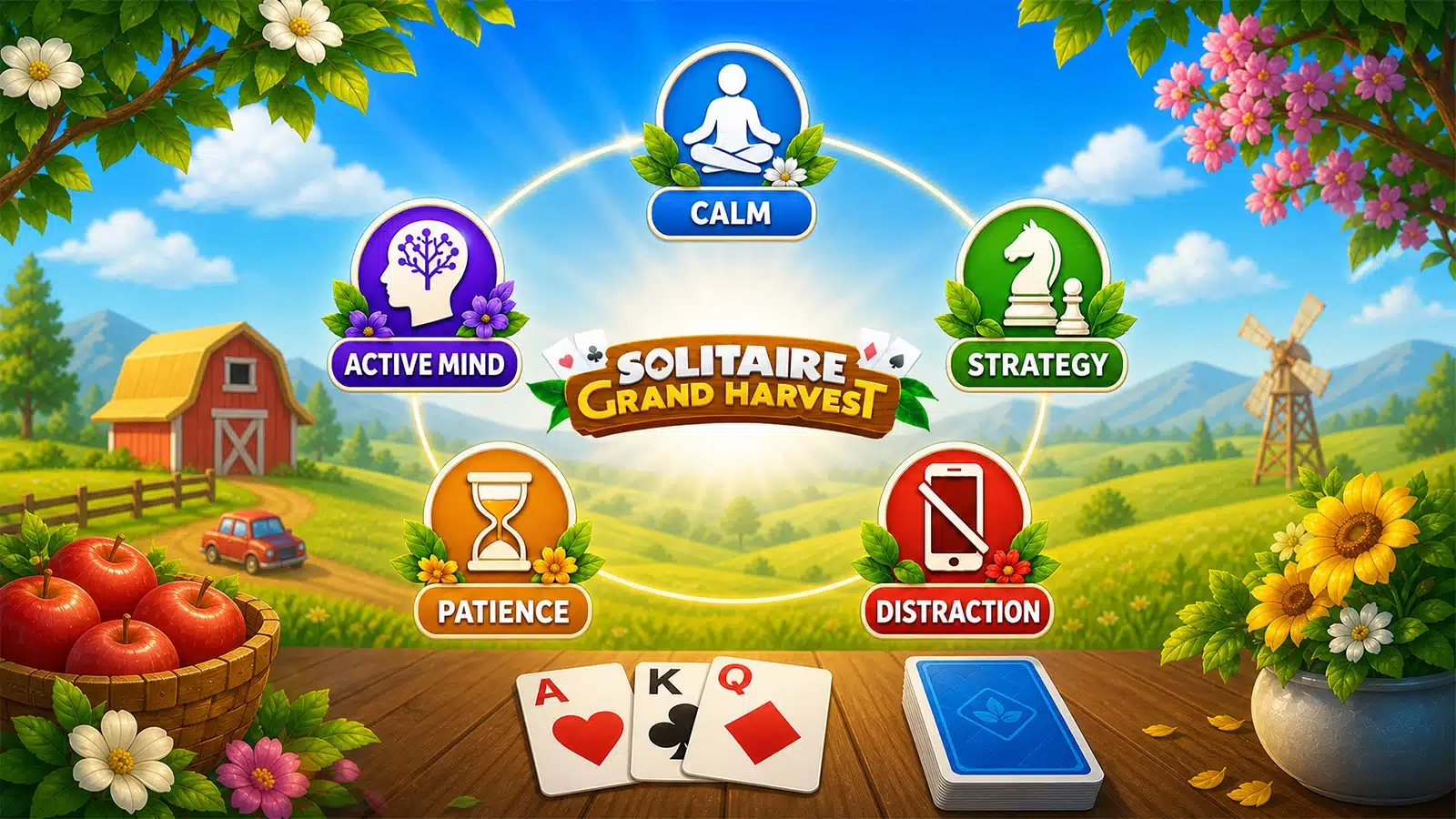
Solitaire is more than a game. It’s a way to take a break from the world while stimulating parts of your brain. Before I let you play some games and train your brain, here’s a quick summary of everything I’ve talked about:
- Playing solitaire is usually relaxing. When you’re relaxed, the body is more likely to shift toward a parasympathetic state, which is generally associated with lower stress and better concentration.
- Playing solitaire may support brain function. This is based on the broader idea that mentally engaging activities are associated with healthier cognitive aging, though solitaire itself hasn’t been studied directly.
- There’s a strategic element to solitaire, which could plausibly engage the brain in ways linked to neuroplasticity.
- Playing solitaire encourages you to be patient. Delaying gratification is a useful skill, even if we can’t say that gameplay directly makes people more patient.
- Playing solitaire can serve as a distraction from other aspects of life. Taking a break from stressful situations may be soothing for the body and mind.
Overall, there are many reasons to play solitaire. So, if you want to give your brain an enjoyable workout, it’s worth trying the latest games at Solitaire Grand Harvest.
Ready to put your brain to the test? Play Solitaire Grand Harvest today.
FAQ
Can playing Solitaire improve memory?
Yes, Solitaire can help exercise your memory because you need to remember cards you’ve seen, possible moves, and patterns in the game. It may not transform memory overnight, but it does give your brain a steady mental workout.
Is Solitaire good for stress relief?
Yes. Solitaire can be calming because it gives you a simple, low-pressure activity to focus on. That can make it a helpful break when you want to relax and step away from stress.
Does Solitaire help with concentration?
It can. Solitaire requires attention, planning, and focus, especially when you’re deciding which move to make next. Playing regularly may help you practice concentration in a fun, relaxed way.
Can Solitaire make you smarter?
Solitaire probably won’t make you smarter in a dramatic sense, but it can support skills like problem-solving, patience, focus, and memory. Those mental habits can be useful in everyday life.
Is Solitaire good for older adults?
Yes, Solitaire can be a good game for older adults because it keeps the mind active without being too complicated. It offers a gentle way to stay mentally engaged while also being enjoyable.
How often should you play Solitaire to get benefits?
You don’t need to play for hours. Even short, regular sessions can help you stay mentally active and give you a quick break from stress. Consistency matters more than long play sessions.
References
[1] Desai V, Gupta A, Andersen L, Ronnestrand B, Wong M. Stress-Reducing Effects of Playing a Casual Video Game among Undergraduate Students. Trends Psychol. 2021;29(3):563-579. doi: 10.1007/s43076-021-00062-6. Epub 2021 Mar 11. PMID: 40477391; PMCID: PMC7952082.
[2] Wang J, Liu N, Zhao X. Association of Playing Cards or Mahjong with Cognitive Function in Chinese Older Adults. Int J Environ Res Public Health. 2022 Jul 28;19(15):9249. doi: 10.3390/ijerph19159249. PMID: 35954599; PMCID: PMC9368645.
[3] Zhao B, Liu Y, Wang Z, Zhang Q, Bai X. Long-Term Bridge Training Induces Functional Plasticity Changes in the Brain of Early-Adult Individuals. Behav Sci (Basel). 2024 May 31;14(6):469. doi: 10.3390/bs14060469. PMID: 38920802; PMCID: PMC11200855.
[4] Anzman-Frasca S, Singh A, Curry D, Tauriello S, Epstein LH, Faith MS, Reardon K, Pape D. Evaluating a Board Game Designed to Promote Young Children’s Delay of Gratification. Front Psychol. 2020 Nov 11;11:581025. doi: 10.3389/fpsyg.2020.581025. PMID: 33262729; PMCID: PMC7686572.
[5] Rasheed N. Prolonged Stress Leads to Serious Health Problems: Preventive Approaches. Int J Health Sci (Qassim). 2016 Jan;10(1):V-VI. PMID: 27004066; PMCID: PMC4791152.